


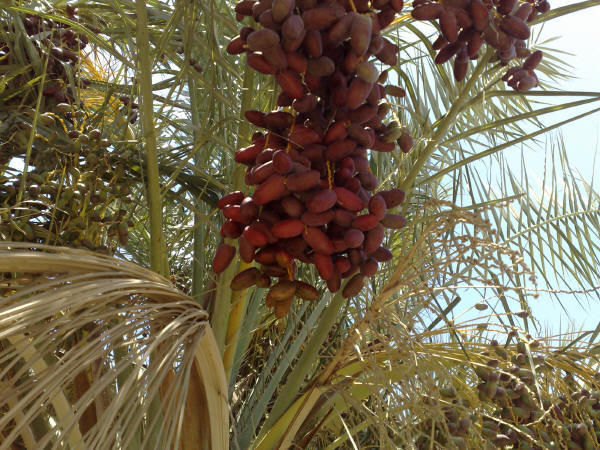
Dates are naturally rich in sugars and can be processed into syrups and sweeteners for food and beverages. Depending on variety and processing conditions, the product may show high color, turbidity and impurities that limit industrial use. Pentafood plants prepare the solution and perform decolorization/purification with resins to obtain a more stable and repeatable output.
Date processing plants
Date treatment and decolorization plants with food-grade resins (Pentafood)
What Pentafood date processing plants are
Date processing plants are column systems using ion exchange resins and adsorbent resins to remove or modulate specific components in date solutions. The treatment is engineered to be selective, traceable and easy to integrate into production lines.
The goal is a controlled process that supports quality targets while maintaining operational continuity.
How they fit into production operations
Pentafood plants are PLC controlled across all phases, including processing, regeneration and storage. Automation enables anomaly detection with local alarms and, where configured, remote notifications to support operational continuity.
Key advantages
- Selective action on critical parameters with process control.
- Repeatable industrial process for different scales of production.
- Automation ready sequences with alarms and optional remote support.

Main applications of Pentafood date processing plants
Below are common applications. Each solution is engineered according to matrix, objectives and line constraints, with defined targets and repeatable operation.
Solutions focused on stabilization of key parameters, with modular layouts depending on flow rate and campaign volumes.
Systems designed to adjust color under controlled conditions, based on process engineering and product specifications.
Plants aimed at reducing impurities and solids that can compromise stability, ensuring operational continuity.
Adsorbent resin plants to selectively reduce color fractions responsible for negative characteristics. The line can include color recovery options as needed.
Solutions for must processing, engineered according to matrix, objectives and line constraints.
Pentafood also manufactures multifunctional systems that combine multiple treatments into one configurable platform. A common sequence can include decolorization, color recovery and stabilization.
How to size a processing plant for dates
Sizing is driven by the matrix, the process target and the outlet specifications, plus production constraints and utility management. A correct sizing approach supports repeatability and operational continuity.
- Matrix date solutions, process targets and outlet specifications.
- Flow rate, campaign volumes, operating windows and line constraints.
- Initial analytics and targets, including color and turbidity where relevant.
- Regeneration strategy and utilities management according to configuration.
Why choose Pentafood
Pentafood designs processing plants for dates with a production focused approach, combining selective treatment, traceable operation and PLC controlled sequences.
Plants are engineered to be easy to integrate into production lines and scalable across different requirements.
FAQ
It selectively reduces the color of date solutions by passing them through food-grade resin columns, improving transmittance and product stability with a controlled, repeatable process.
Two or more columns increase capacity and uptime, allowing service and regeneration to be managed without stopping production and enabling higher quality targets to be reached more consistently.
It is strongly recommended: filtration removes impurities and solids that can clog resin beds, increase pressure drop and reduce resin lifetime.
Yes. An optional dedicated column can be added for internal washing and recovery of the retained color fraction, useful for stream valorization and optimized cycle management.
Plants are PLC-controlled and automatically manage treatment, washes and regenerations. Recipe-based logic improves repeatability, reduces operating errors and enables continuous production with reduced staffing.
Flow rate, operating hours, specifications for color and turbidity, plus layout constraints and utility management requirements are all critical inputs for sizing.
The process is designed to act on color and impurities targets. Resin selection and cycle settings aim to preserve the product profile; for critical applications, analytical controls and validations are defined.