



Resin plants for enocyanin recovery are industrial packed‑column systems designed to selectively separate colour compounds from grape must and grape juice. They enable two outputs: a decoloured must/juice with improved process stability, and a concentrated stream rich in anthocyanins and polyphenols suitable for use as a natural colour ingredient in various applications.
Enocyanin recovery plants from must
Process overview
After pressing, the potassium and tartaric acid present can form undesired precipitates. This can affect product clarity and consumer perception. Our systems effectively mitigate this issue by producing a stable, clear final product and improve marketability.
Engineering and automation
The system operates in a cyclic mode with a service phase leading to automatic regeneration sequences controlled by a PLC. This ensures optimal operation while maintaining consistent quality. Advanced systems may also offer remote diagnostics for enhanced operational efficiency.
Key advantages
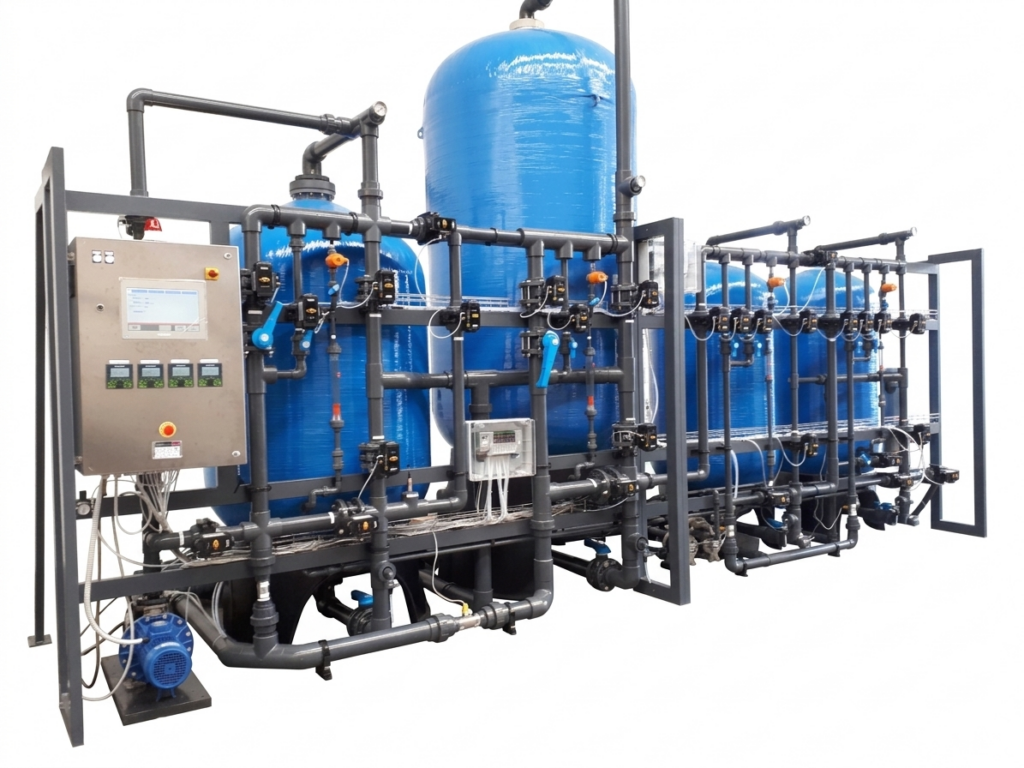
Technical configuration
Wine flows through packed columns filled with adsorbent resins specifically engineered to selectively bind colour components. This process maintains the integrity of other essential compounds and enhances the overall quality of the final product.
The system is installed on a robust stainless-steel frame, with hygienic pumps facilitating smooth operation. Automation features include valves that ensure precise control of fluid dynamics to uphold plant efficiency.
Sizing inputs
- Matrix type (must/juice) and clarification level.
- Initial colour intensity and target adjustments.
- Variability in anthocyanins/polyphenols content.
- Required flow rates and operational volumes.
- Regeneration route selection and relevant process constraints.
Achieving stability often only requires treatment of a fraction of the total volume, blending back to meet final quality requirements while preserving essential characteristics.
FAQ
It is a natural oenological colour extract mainly made of anthocyanins and, depending on the matrix, other polyphenols such as tannins, catechins and proanthocyanidins.
It produces a decoloured (or colour‑adjusted) must/juice and a concentrated colour stream rich in recovered anthocyanins and polyphenols, suitable for ingredient use or colour correction.
To protect the resin bed from plugging and fouling, preserve adsorption capacity and ensure repeatable cycles with less cleaning downtime.
Mainly anthocyanins and other colour‑related polyphenols; the extent depends on the resin media and operating set‑points.
Hydroalcoholic regeneration desorbs colour into an alcohol‑water stream that can be concentrated with solvent recovery; alkaline regeneration produces a colour stream that can be further purified on dedicated resins. Route choice depends on purity and plant constraints.
Yes. Service, washing and regeneration cycles are typically PLC‑controlled, and remote diagnostics/alerts can be integrated when required.
Yes. By selecting treatment intensity and blending treated and untreated fractions, colour can be tuned up or down to the required target.
Matrix type and upstream filtration, initial colour and target, anthocyanins/polyphenols variability, flow rates/volumes, regeneration route selection and safety/effluent constraints.