
Gum arabic processing plants

Resin plants for gum arabic decolorization: food-grade quality, automation and optional color recovery.

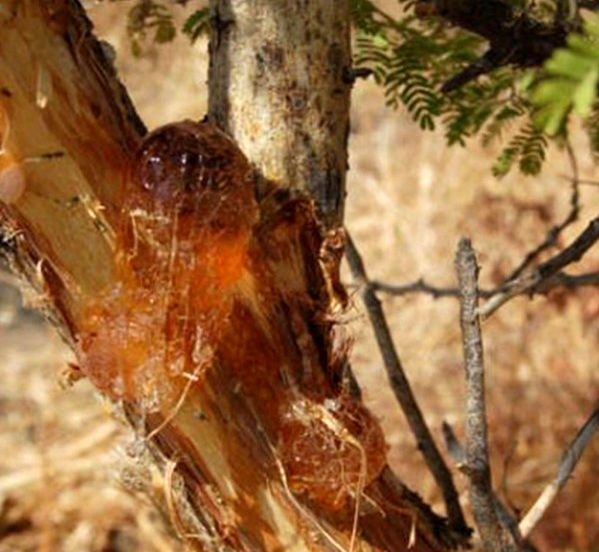
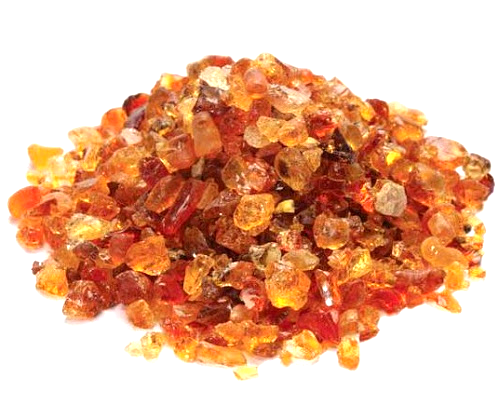
Gum arabic (acacia gum) is a natural ingredient widely used as a stabilizer and thickener in food and beverages, especially confectionery and drinks. In some supply chains, colored components and impurities may require decolorization to improve appearance and ensure more consistent batches.

Pentafood designs column plants with selective adsorbent resins to decolorize gum arabic solutions, featuring PLC automation to run service, regeneration and, when requested, color recovery.
What gum arabic decolorization is and when it is used

Decolorization is a fixed-bed adsorption treatment that selectively removes color-contributing fractions and related impurities. It is used when a clearer product is needed and when consistency between batches is critical for specific applications (candies, glazes, beverages, flavored preparations).

How a Pentafood gum arabic decolorization plant works

The plant operates in an automatic manner: the PLC manages sequences of service, rinses, regeneration and (if included) color recovery, reducing the need for constant operator presence and supporting batch consistency.

Key advantages

  • Selective action to improve product appearance and uniformity.
  • Automated processes enhance operational efficiency and consistency.
  • Custom configurations to suit specific production requirements.

Main applications of Pentafood gum arabic decolorization plants

Below are common applications. Each solution is engineered according to matrix, objectives and line constraints, with defined targets and repeatable operation.

Adsorbent resin plants to selectively reduce phenolic fractions responsible for color. On request, the line can include color recovery to add value to the process.

Modular systems with integrated manifolds to simplify installation and facilitate operations in various production environments.

Flexible layout options are available for adapting to specific production setups and requirements, ensuring seamless integration.

Plant design accounts for varying flow rates, essential for managing different production volumes and campaign periods efficiently.

Tailored engineering solutions focus on enhancing efficiency in the decolorization process while addressing specific operational challenges.

How to size a gum arabic decolorization plant

Sizing is driven by the matrix, the process target and the outlet specification, plus production constraints and utility management. A correct sizing approach supports repeatability and operational continuity.

  • Matrix of gum arabic, process target and outlet specification.
  • Flow rate, campaign volumes, operating windows and line constraints.
  • Specifications related to color, impurities and desired outcomes.

Why choose Pentafood for gum arabic processing

Pentafood designs resin plants for gum arabic processing with a focus on quality, operational efficiency, and production uniformity to meet industry standards.

FAQ

It selectively removes color-contributing fractions and related impurities to obtain a clearer product with better batch-to-batch consistency.

Mainly confectionery (candies, glazes), beverages and preparations where appearance and consistent color are critical.

Filtration reduces solids and particulates that can foul or clog the resin bed, improving uptime and resin lifetime.

Typically two or three columns for decolorization, sized to throughput and campaign volumes. An optional additional column can be added for color recovery.

It is an optional feature to recover the colored fraction retained by the resins using an alcohol-based step on a dedicated column, adding value to the process.

Key inputs include gum characteristics (color/impurities, form), solution concentration, flow rate and campaign volumes, target color and installation constraints.