


Punicalagin is a high‑molecular‑weight polyphenol primarily located in the peels of pomegranates. Its extraction is essential for enhancing the value of by‑products, catering to food, nutraceutical, and functional ingredient industries, which demand consistent quality and standardized extracts.
Punicalagin recovery plant from pomegranate
Process overview
The extraction involves turning pomegranate peels into an aqueous solution, which is then filtered to eliminate solids and enhance the resin’s operational stability. This method improves repeatability and maximizes recovery yields throughout the process.
Engineering and automation
The extraction system functions in a cyclic manner: service phases are followed by automatic regeneration of the resin using a dedicated regenerant. The entire operation is overseen by a PLC with an HMI, ensuring efficient control and traceability throughout the process.
Key advantages
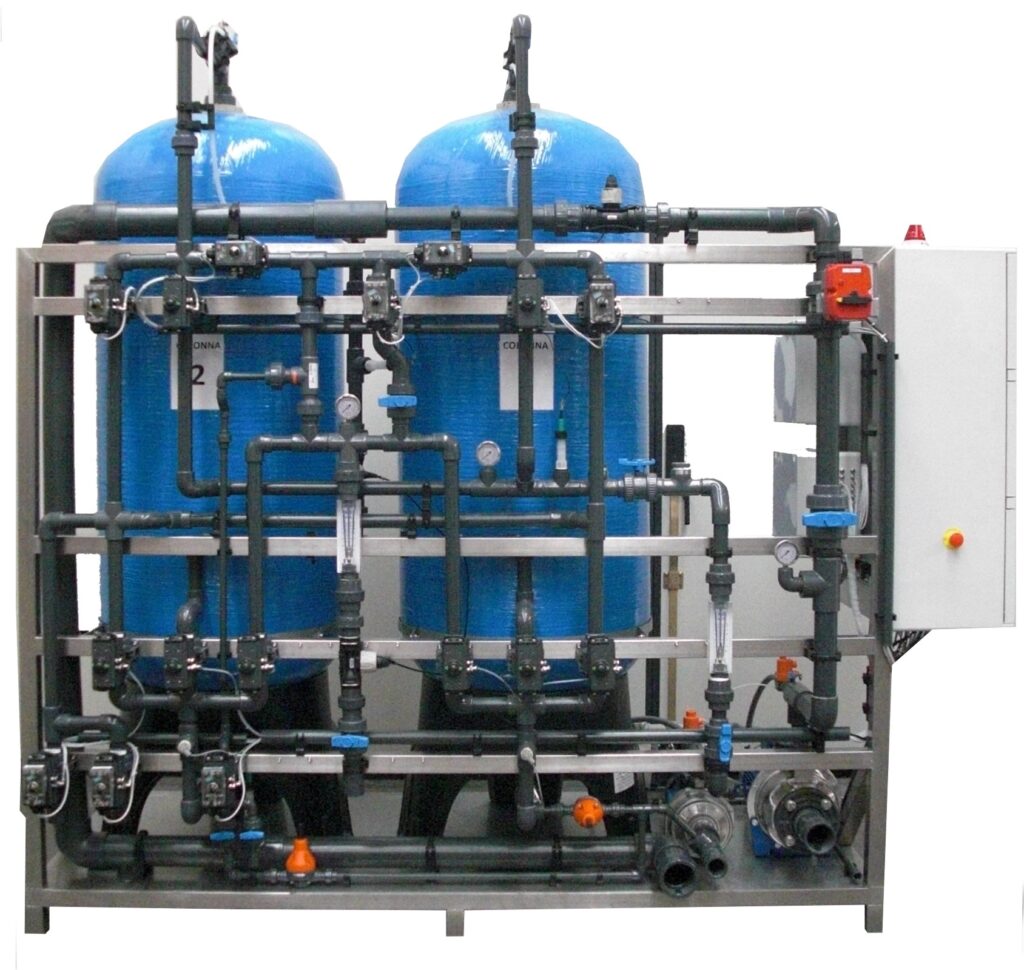
Technical configuration
The punicalagin recovery process employs columns filled with specialized adsorbent resins. These resins selectively capture punicalagin while managing color fractions, thus maintaining the desired product quality. The system is housed within a robust stainless-steel frame, ensuring hygienic handling of the product at all stages of extraction.
Controlled flow dynamics are facilitated by pneumatic valves to manage the aqueous solution entering the resin systems effectively, optimizing extraction conditions for maximum yield.
Sizing inputs
- Pomegranate peel type and processing parameters.
- Initial concentrations of punicalagin.
- Desired extraction flow rate and production volume.
- Filtration requirements and pulp load considerations.
- Purity target and product specifications.
Evaluating feed characteristics is crucial for determining the appropriate sizing of the plant, ensuring efficient extraction and product quality without compromising operational effectiveness.
FAQ
Punicalagin is mainly concentrated in pomegranate peels, which are often processed via aqueous extraction and filtration before resin adsorption.
It selectively retains punicalagin on adsorbent resin columns, enabling process streams suitable for producing standardized extracts and valorizing by‑products.
To remove solids and colloids, protect the resin bed and prevent fouling, improving stability, repeatability and recovery yield.
Usually 1, 2 or 3 columns, depending on the required purity level, feed matrix and desired throughput.
Yes. Depending on configuration, adsorbent resins may retain color‑related fractions, contributing to color control alongside punicalagin capture.
The plant is fully automated (service and regeneration managed by PLC) and typically does not require constant staffing under standard conditions.
Yes. An optional automatic system can be provided to recover a purified colorant as a valuable co‑product.