



Copper in grape must may originate from vineyard treatments, storage conditions, processing equipment or soil characteristics. When copper levels are high, they can affect product stability and quality. Pentafood copper‑removal plants use food‑grade selective resins packed in a treatment column to remove copper while preserving must characteristics.
Copper removal from must systems
Process overview
In must, copper ions can lead to instability and potential quality issues. Pentafood offers efficient copper removal through engineered resin systems, which target copper without altering the essential components of the must. This solution maintains the integrity of the product while effectively managing copper levels.
Engineering and automation
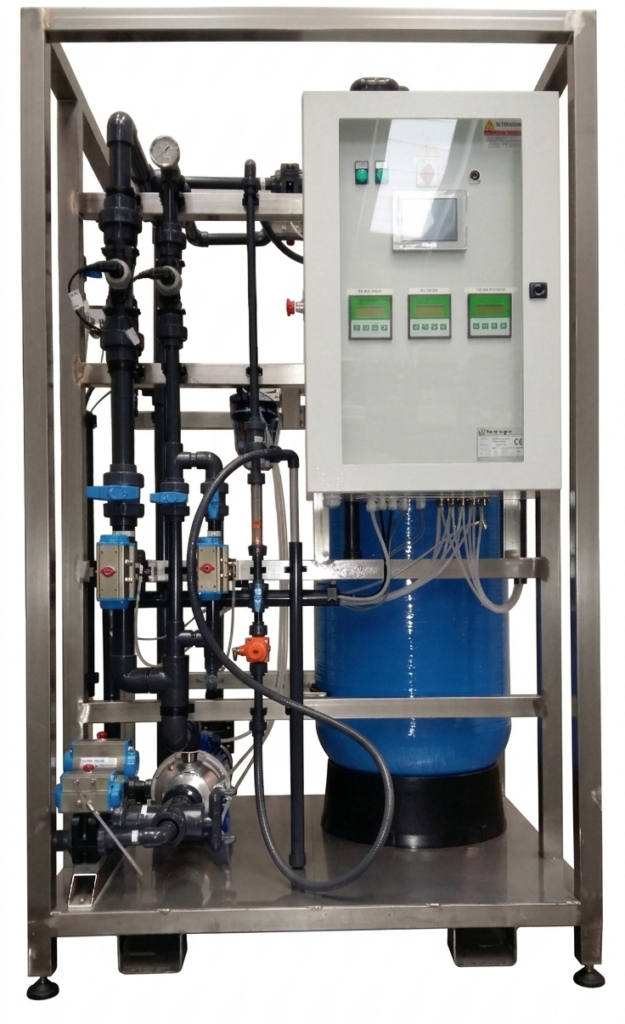
The system features automated cycles for copper removal, ensuring consistent performance. It is designed for streamlined operation, with real-time monitoring to optimize efficiency. Operators can access a user-friendly interface for managing and reviewing treatment parameters effectively.
Key advantages
Technical configuration
The resin system employs selective resins to capture copper ions effectively while allowing other vital components in must to flow unimpeded. This approach minimizes sediment formation and enhances sensory quality.
The construction includes a robust frame and a stainless-steel pump to ensure reliable operation. Automated valves regulate flow rates, safeguarding hygiene standards and operational precision.
Sizing inputs
- Initial copper concentration and target outlet level.
- Flow rate specifications and treatment volume/campaign.
- Must characteristics such as turbidity and upstream filtration.
- Operating mode (if batch or continuous) and related constraints.
- Capacities for utilities and handling of regeneration by-products.
For effective copper management, treating a specific percentage of the must and then re-integrating it can yield the desired stability while preserving overall product integrity.
FAQ
It may come from vineyard treatments, storage conditions, contact with processing equipment, or soil characteristics; in some cases, copper can exceed the process target.
Must passes through a column packed with selective resin that binds copper ions. Media selectivity targets copper while keeping must characteristics as stable as possible.
The typical copper‑removal configuration uses a single column with selective resin, but the layout can be adapted to throughput and specifications.
Regeneration is performed with an acidic reagent, often sulfuric acid or hydrochloric acid, followed by rinsing to restore the resin.
Yes. A PLC manages service, rinsing, and regeneration. Local and remote alarm notifications can be implemented, along with standby/storage sequences.
At minimum: initial and target copper levels, flow rate and volumes, must characteristics (turbidity/filtration, temperature, °Brix), operating mode, and constraints for utilities and regeneration effluent handling.
Yes. Multiple sizes are available for small wineries up to large producers, with customized options.
Yes. Flow rate, materials, instrumentation, and automation level can be tailored to the site and process requirements.