



Pesticide residues may be present in fruit and, consequently, in derived products such as juices, extracts, purees and musts. In some situations, even when each single substance is within limits, multi-residue management can require tighter process control. Pentafood pesticide‑purification plants use selective resin columns to retain targeted active substances and deliver a treated product aligned with the required specification.
Must pesticide removal plants
Pesticide removal from fruit and fruit derivatives using food‑grade resin plants
Process overview
The initial phase involves filtration to eliminate solid particulates, enhancing the operation of the resin system. By configuring the treatment with tailored cycles, the effectiveness of pesticide retention is maximized. This systematic approach ensures the delivery of a treated product meeting strict quality parameters.
Engineering and automation
Our plants are designed for full automation, with an integrated system that optimizes processes, including monitoring and control. The PLC management grants precise command over service and regeneration cycles, which enhances operational stability. The system’s traceability features support compliance and reporting.
Key advantages
Technical configuration
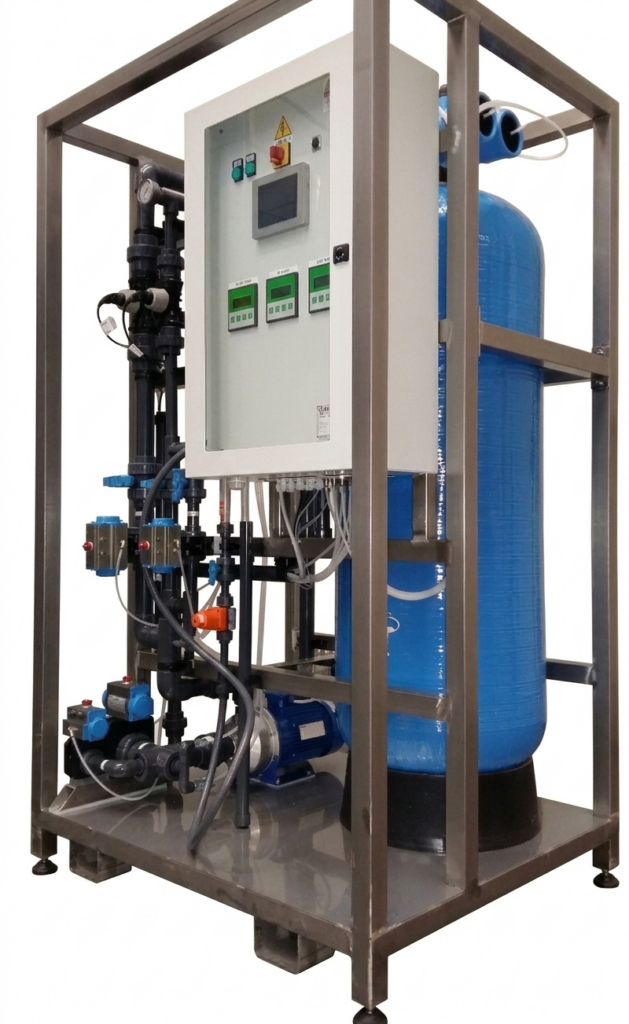
The plant is assembled on a compact skid with essential components for operational efficiency. Product flow is ensured through a robust pump system that guides materials through stainless steel piping. Dedicated controls maintain the integrity of treatment while automation promises accurate measurements for flow and concentration.
The unit is designed for quick setup and seamless integration into existing processing lines, ensuring minimal disruption.
Sizing inputs
- Matrix properties: °Brix, pH, temperature, turbidity and upstream filtration level.
- Required flow rate and campaign volumes.
- Target pesticide list and reduction goals.
- Operating mode: batch/continuous and production windows.
- Available utilities and handling of rinsing/regeneration solutions.
In many cases, applying treatments to just 5 to 25 percent of the product and blending back helps meet the stability criteria without significant alterations to fatty acid levels.
FAQ
Multi‑residue means the simultaneous presence of several pesticides at low levels. Even if each single compound is controlled, industrial specifications may require lowering the overall burden and improving repeatability.
There is no universal answer: performance depends on the active substance, the matrix and the cycle recipe. Targets are defined through a selected analytical panel and validated with before/after testing.
The goal is to reduce residues while keeping the matrix as unchanged as possible. Any impact is assessed through process trials and analytical/sensory checks on representative samples.
Typically juices (citrus/tropical), extracts and fruit bases. Purees or more viscous matrices are evaluated case‑by‑case depending on viscosity and filterability.