



Grapes and grape must may contain pesticide residues due to agricultural practices and supply-chain variables. When residue reduction is needed, Pentafood RIM series plants utilize food-grade selective resins arranged in a treatment column that effectively capture pesticides, delivering purified must with automatic cycles and stable operational performance throughout production runs.
Juice pesticide removal plants
Process overview
Pesticide residues can affect the quality and safety of grape must. A resin-based treatment allows for the controlled removal of these residues, ensuring compliance with regulatory standards while maintaining the overall quality of the must.
Engineering and automation
The system is designed to operate efficiently with automatic cycles for service and resin regeneration. Utilizing a touch-screen PLC, operations can be managed remotely, minimizing the need for constant human oversight and enhancing production consistency.
Key advantages
Technical configuration
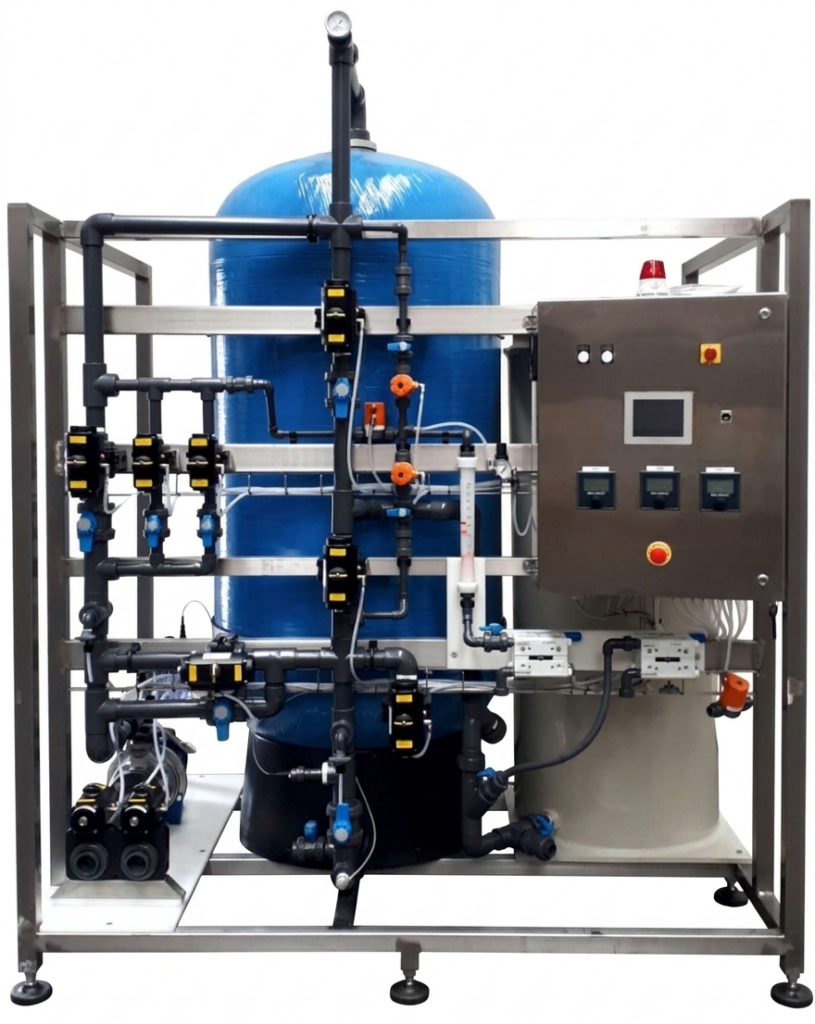
The Pentafood RIM plant operates with selective resins in a compact stainless-steel frame. Wine is pumped through resin columns, capturing pesticides effectively. This setup not only ensures efficient removal but also promotes hygiene through pneumatic valve systems.
Key components include a robust stainless-steel frame, advanced touch-screen PLC for automation, and specially designed piping that facilitates consistent and clean operations.
Sizing inputs
- Feed matrix (must) and its characteristics (°Brix, temperature, turbidity).
- Required flow rate and treatment volumes per campaign.
- Target pesticide types and desired reduction levels.
- Operational constraints (batch vs. continuous processing).
- Utility requirements and handling of rinsing solutions.
Achieving overall stability often involves treating a portion of the must and blending it back into the batch, allowing for minimal pH and acidity shifts while effectively meeting quality standards.
FAQ
It treats grape must through a selective food-grade resin column that retains pesticide residues and returns purified must according to the target.
Yes. The RIM series is available in multiple sizes and can be tailored for small, medium and large wineries.
No. A touch-screen PLC automatically manages service, rinsing and resin regeneration, enabling operation without constant attendance.
Performance depends on the active substance, the must matrix and the recipe. Targets and stop criteria are defined and verified through trials and analytics.
A stainless-steel skid with a food-grade certified column, selective resins, pump and piping, pneumatic valves, and an electrical cabinet with PLC.
Key data include flow rate/volumes, must properties, target pesticide list and reduction goals, plus operating constraints and utilities availability.
Yes. The compact skid layout and automatic operation support integration, with customization of connections and automation as required.
By testing representative samples and comparing before/after analytical results on the pesticide panel to confirm efficiency, capacity and repeatability.