


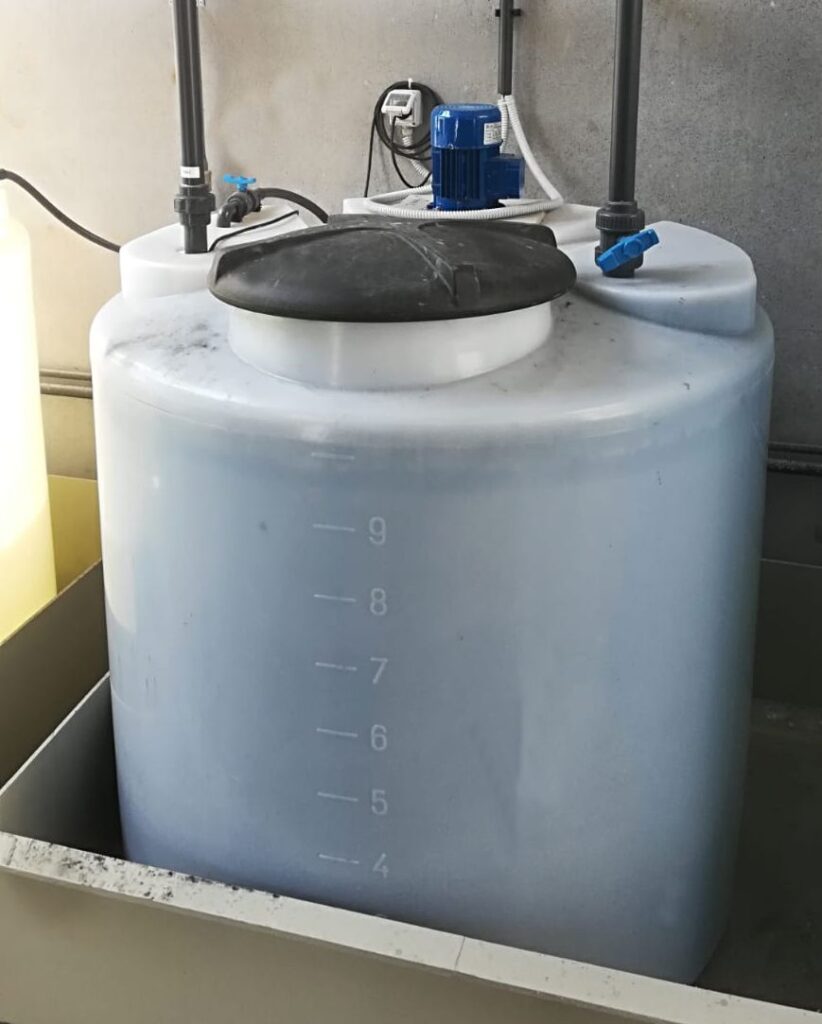
A chemical reagent dissolution and preparation plant is an automatic system that efficiently mixes and dilutes acidic and alkaline reagents, delivering solutions at precise concentrations. This ensures the quality of the dilution process, which is vital for safe operations and the efficient functioning of food processing systems.
Chemical reagent dissolution plants
Automatic systems for chemical reagent dissolution and preparation (caustic soda, acids)
Process overview
In food processing, *potassium (K+)* and *sulfuric acid* often coexist, facilitating the formation of various salts that can settle. Crystals generated during this process can disrupt product appearance and acceptance in the market, thereby affecting overall quality.
Engineering and automation
The equipment operates in a *cyclic mode*, utilizing a PLC for automated control of dilution and mixing processes, enhancing repeatability. A touch-screen HMI simplifies user interactions while ensuring data integrity through inline measurement systems supporting traceability.
Key advantages
Technical configuration
The system comprises columns containing a cation exchange resin, effectively capturing cations while releasing protons. This operation diminishes the formation of undesirable salts, promoting product longevity and stability.
Constructed on a robust stainless-steel framework, the unit features a stainless-steel pump directing reagents into resin columns. Pneumatic valves facilitate precise flow control, prioritizing hygienic operations throughout the process.
Sizing inputs
- Type of reagents and expected concentration levels.
- Initial concentrations of caustic soda and acids.
- Desired flow rates and production volumes.
- pH levels and acidity specifications.
- Filtration requirements and feed characteristics.
For optimal results, treating a limited proportion of the total production volume while returning the blended solution ensures stability and meets quality constraints.
FAQ
It automatically mixes and dilutes acidic and alkaline reagents to deliver solutions at the required concentration, improving repeatability and operational safety.
Most commonly caustic soda, sulfuric acid, and hydrochloric acid, mainly used for washes and resin regeneration cycles in food processing.
It reduces handling risks, avoids concentration errors, and ensures more stable and repeatable regeneration and cleaning cycles.
Yes. It is PLC-controlled with an independent panel and can interlock with various specialized treatment plants.
Yes. It is designed as a calibrated, instrument-controlled mixing unit for both acidic and alkaline reagents.
Yes. Capacity and recipes can be tailored according to downstream requirements, including concentrations and processing sequences.
Under standard conditions, no. The unit is fully automatic and PLC-controlled, featuring alarms and safety logic for unattended operations.